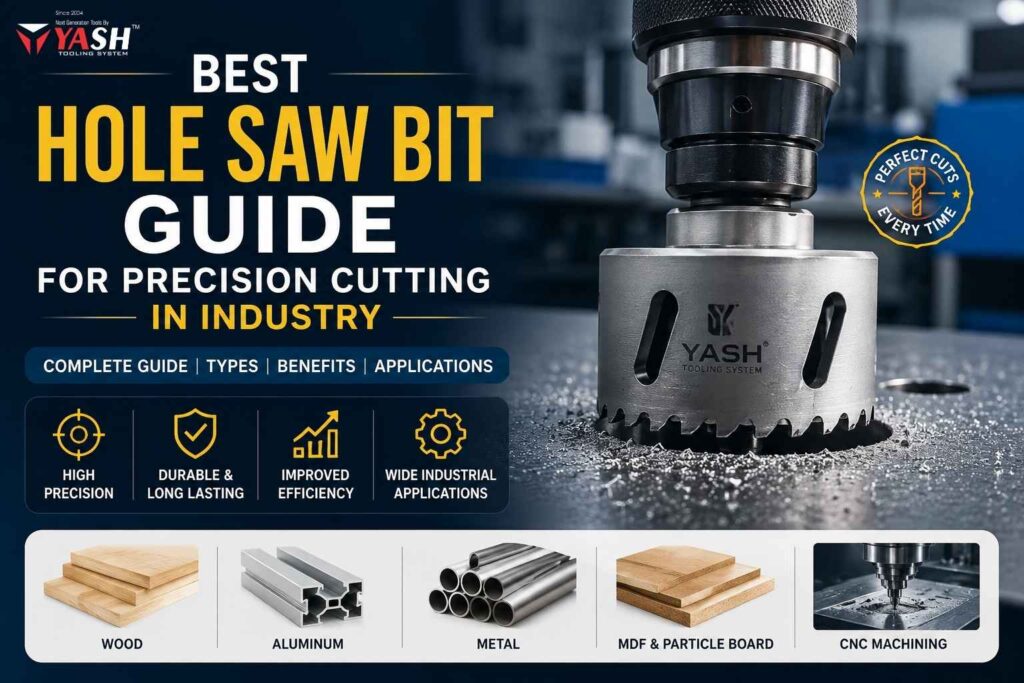
In modern manufacturing, precision is not optional—it is essential. Whether you are working in furniture production, metal fabrication, or construction, achieving clean and accurate holes can directly impact product quality. That is exactly where the hole saw bit becomes a game-changer.
Unlike standard drill bits, a hole saw bit is specifically designed to create perfectly round holes with minimal material waste. As a result, industries rely heavily on this tool for efficiency, speed, and consistency. In this comprehensive guide, you will learn everything about hole saw bits—from types and benefits to expert usage tips—so you can make smarter decisions and improve your cutting performance.
What is a Hole Saw Bit and Why It Matters in Industry
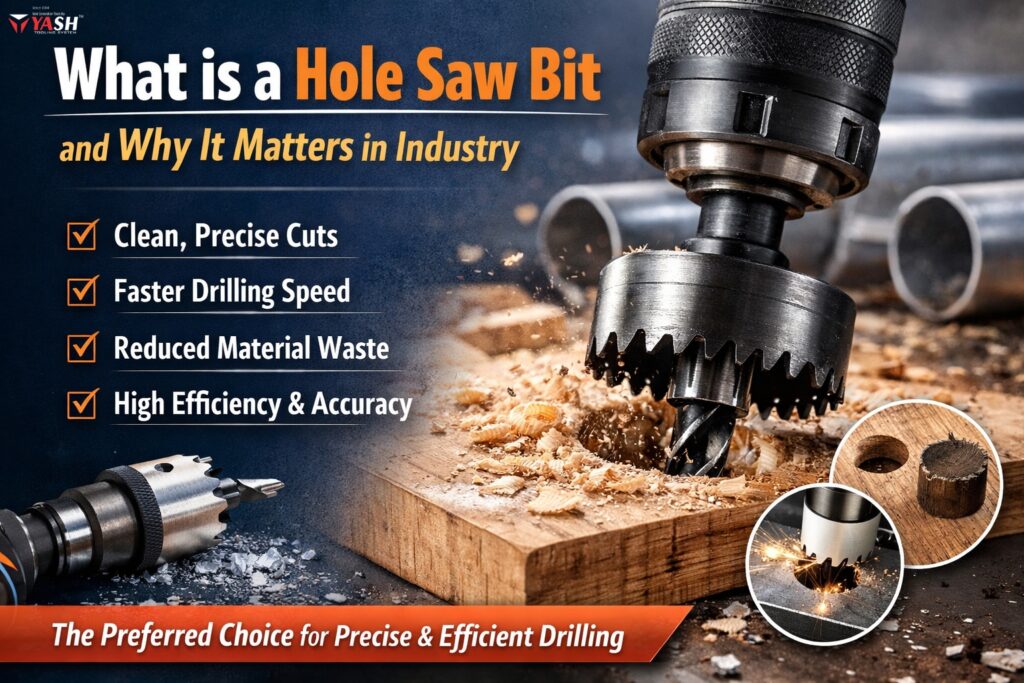
A hole saw bit is a cylindrical cutting tool attached to a drill. It cuts a circular hole by removing material only from the outer edge, leaving the core intact. Because of this design, less power is required, and cutting becomes faster and smoother.
Moreover, industries prefer this tool because it delivers:
- Clean cuts with minimal splintering
- Faster drilling compared to spade or twist bits
- Reduced material waste
- High precision for repeated operations
Therefore, when precision and efficiency are required together, a hole saw bit becomes the preferred choice.
Hole Saw Bit Types for Precision Cutting in Industry
Choosing the right type is crucial because different materials demand different cutting technologies. Let’s explore the most commonly used options.
Bi-Metal Hole Saw Bit
Bi-metal hole saw bits are widely used in industrial applications. They combine flexibility with durability, making them suitable for wood, plastic, and thin metals.
Key Features:
- Long-lasting cutting edges
- Heat resistance
- Versatile usage
Carbide-Tipped Hole Saw Bit
Carbide-tipped versions are designed for tougher materials. Because of their strong teeth, they can easily cut through hardwood, MDF, and even metals.
Key Features:
- Extremely durable
- Ideal for heavy-duty industrial work
- High precision cutting
Diamond Hole Saw Bit
These are used for highly specialized applications such as cutting tiles, glass, and ceramics.
Key Features:
- Smooth and chip-free cuts
- Perfect for brittle materials
- Longer lifespan in specific applications
Benefits of Using Hole Saw Bit in Modern Manufacturing
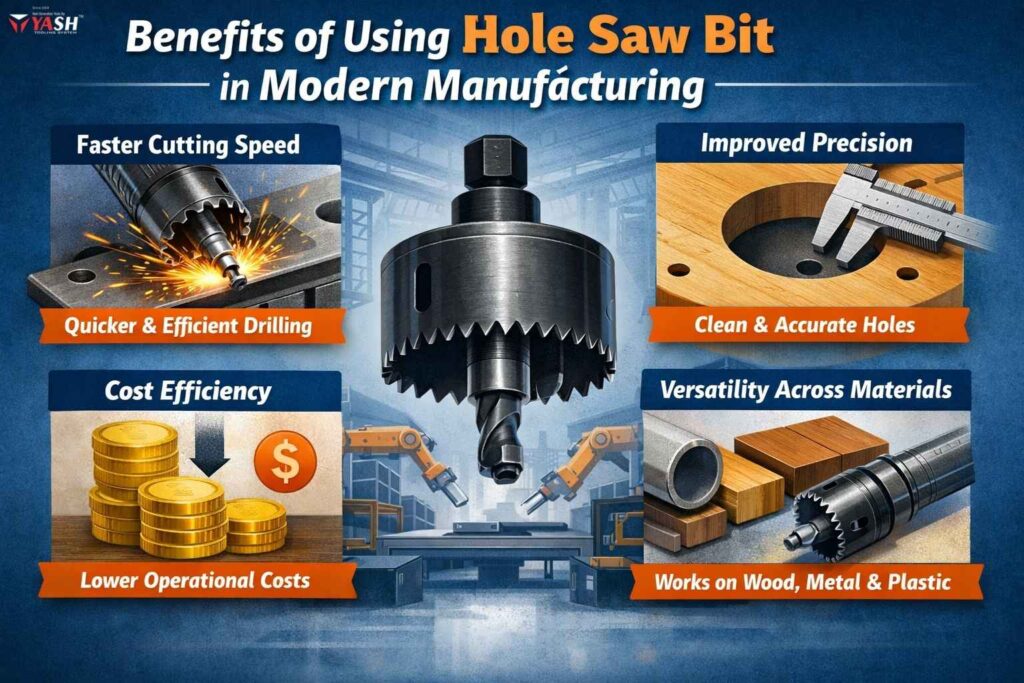
Industries are constantly looking for tools that improve productivity. A hole saw bit offers multiple advantages that directly support this goal.
Faster Cutting Speed
Since only the outer edge is cut, less material is removed. Consequently, drilling becomes significantly faster.
Improved Precision
Clean and accurate holes are produced consistently. Therefore, it reduces rework and material wastage.
Cost Efficiency
Because the tool lasts longer and reduces waste, overall operational costs are lowered.
Versatility Across Materials
From wood to metal and plastic, one tool can serve multiple purposes. This flexibility increases efficiency in production lines.
How to Choose the Best Hole Saw Bit for Industrial Use
Selecting the right hole saw bit is critical. However, many users overlook key factors, which leads to poor performance.
Material Compatibility
First, identify the material you will be cutting:
- Wood → Bi-metal or carbide
- Metal → Carbide or high-speed steel
- Tile/Glass → Diamond
Size Selection
Hole saw bits come in various diameters. Choosing the correct size ensures accuracy and reduces additional work.
Arbor Compatibility
Make sure the hole saw bit fits your drill machine properly. Otherwise, performance may be affected.
Cutting Depth
Always check the cutting depth. For thicker materials, deeper hole saw bits are required.
Hole Saw Bit Applications in Industrial Sectors
Hole saw bits are used across multiple industries. Their role is not limited to woodworking alone.
Wood Manufacturing Industry
They are widely used in furniture production, door manufacturing, and cabinetry work.
Metal Fabrication
Used for creating holes in sheets, pipes, and panels.
Electrical and Plumbing Work
Perfect for drilling holes for wiring, pipes, and fittings.
Construction Industry
Used for installing fixtures, fittings, and structural components.
Step-by-Step Guide to Using a Hole Saw Bit
Using the tool correctly ensures both safety and performance.
Step 1: Mark the Cutting Area
Always mark the exact spot before drilling. This ensures accuracy.
Step 2: Secure the Material
Clamp the material firmly. Movement can affect precision.
Step 3: Start at Low Speed
Begin drilling slowly. Gradually increase speed for smoother cutting.
Step 4: Apply Steady Pressure
Do not force the tool. Let the hole saw bit do the work.
Step 5: Clear Debris Frequently
Remove chips and debris to prevent overheating.
Common Mistakes to Avoid While Using Hole Saw Bit
Even experienced users make mistakes. Avoiding these can improve results significantly.
Using the Wrong Type
Different materials require different hole saw bits. Using the wrong one reduces efficiency.
Applying Excessive Force
Too much pressure can damage both the tool and the material.
Ignoring Cooling
Heat buildup can reduce tool life. Therefore, cooling is important, especially for metal cutting.
Maintenance Tips to Extend Hole Saw Bit Life
Proper maintenance ensures long-term performance.
Clean After Every Use
Remove dust and debris to maintain sharpness.
Store Properly
Keep tools in a dry place to avoid rust.
Sharpen When Needed
Dull teeth reduce efficiency. Regular sharpening is recommended.
Why Industries Prefer Hole Saw Bit for Precision Cutting
The demand for precision tools is increasing. Hole saw bits meet this demand effectively.
They are preferred because:
- They save time
- They improve accuracy
- They reduce waste
- They enhance productivity
As industries move toward automation and efficiency, the role of such tools becomes even more important.
Conclusion: Choosing the Best Hole Saw Bit for Maximum Performance
A hole saw bit is more than just a cutting tool—it is a critical component in modern industrial operations. From improving efficiency to delivering precise results, its benefits are undeniable.
However, choosing the right type, using it correctly, and maintaining it properly are equally important. When these factors are considered, industries can achieve better productivity and higher-quality output.
So, if you want cleaner cuts, faster performance, and reliable results, investing in the right hole saw bit is the smartest decision you can make.